Full Gallery | Split Categories | Classic Gallery
The profundity of this image is remarkably conveyed through the...
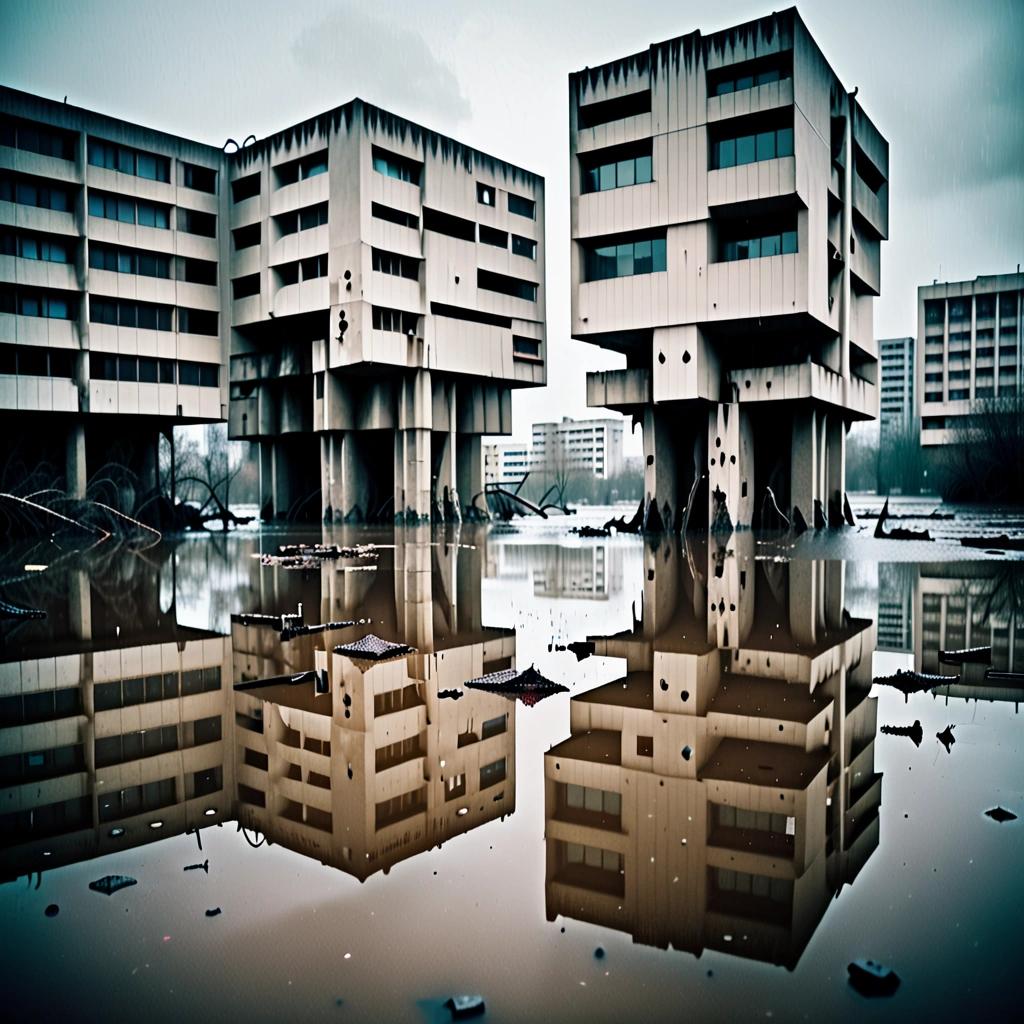
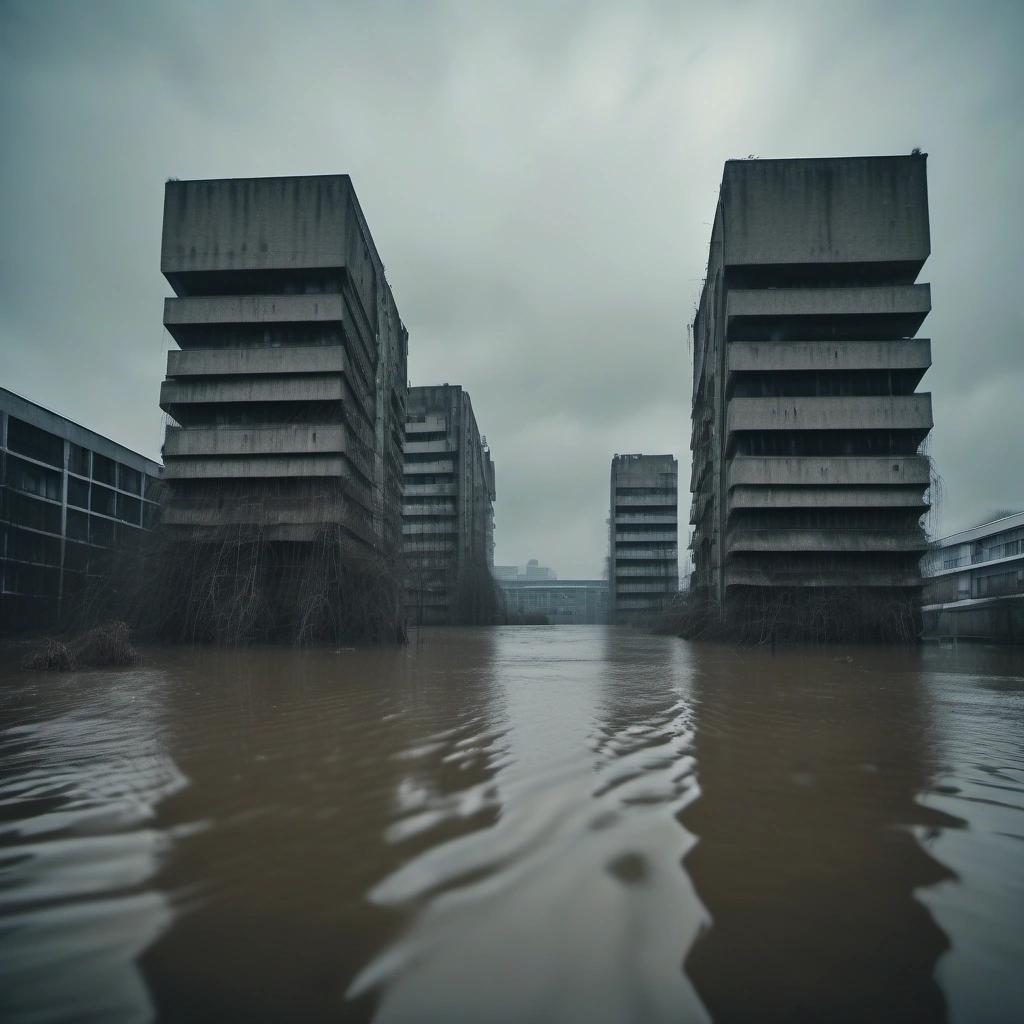
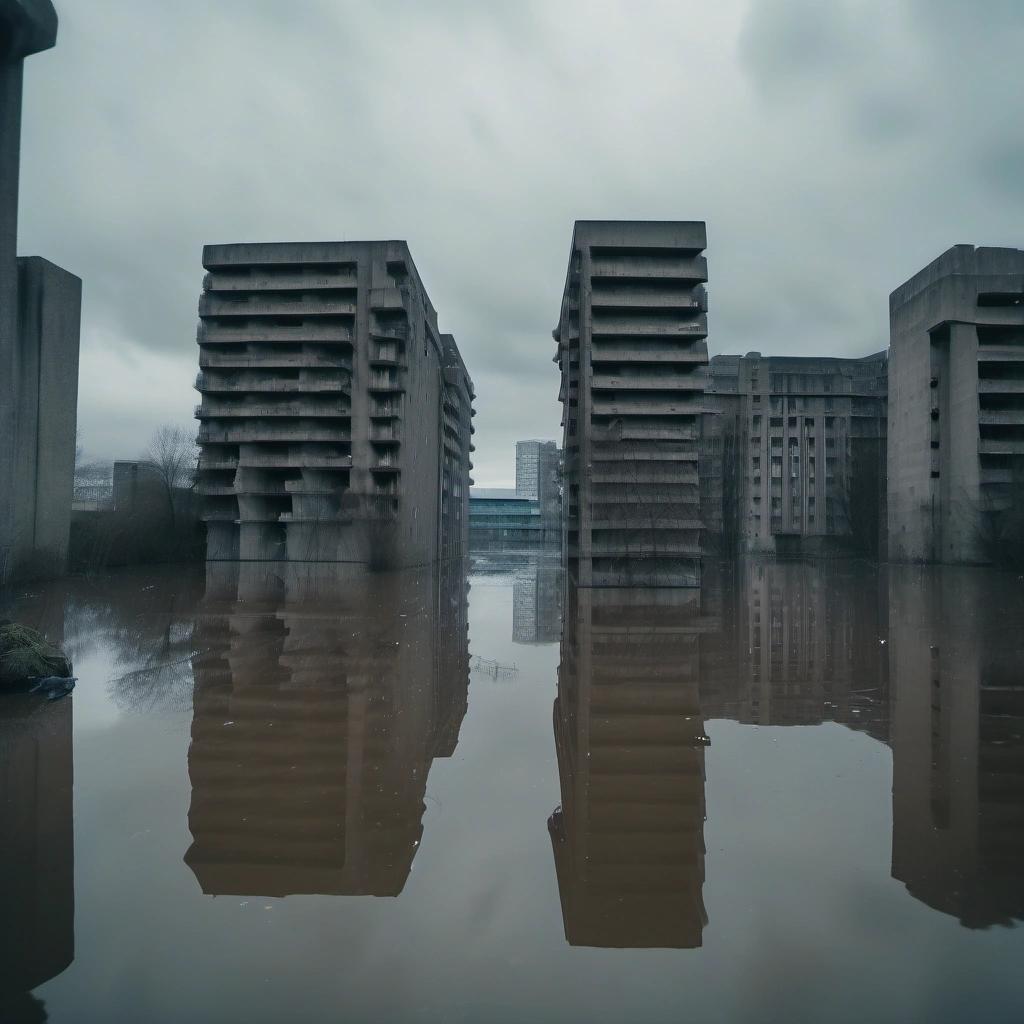
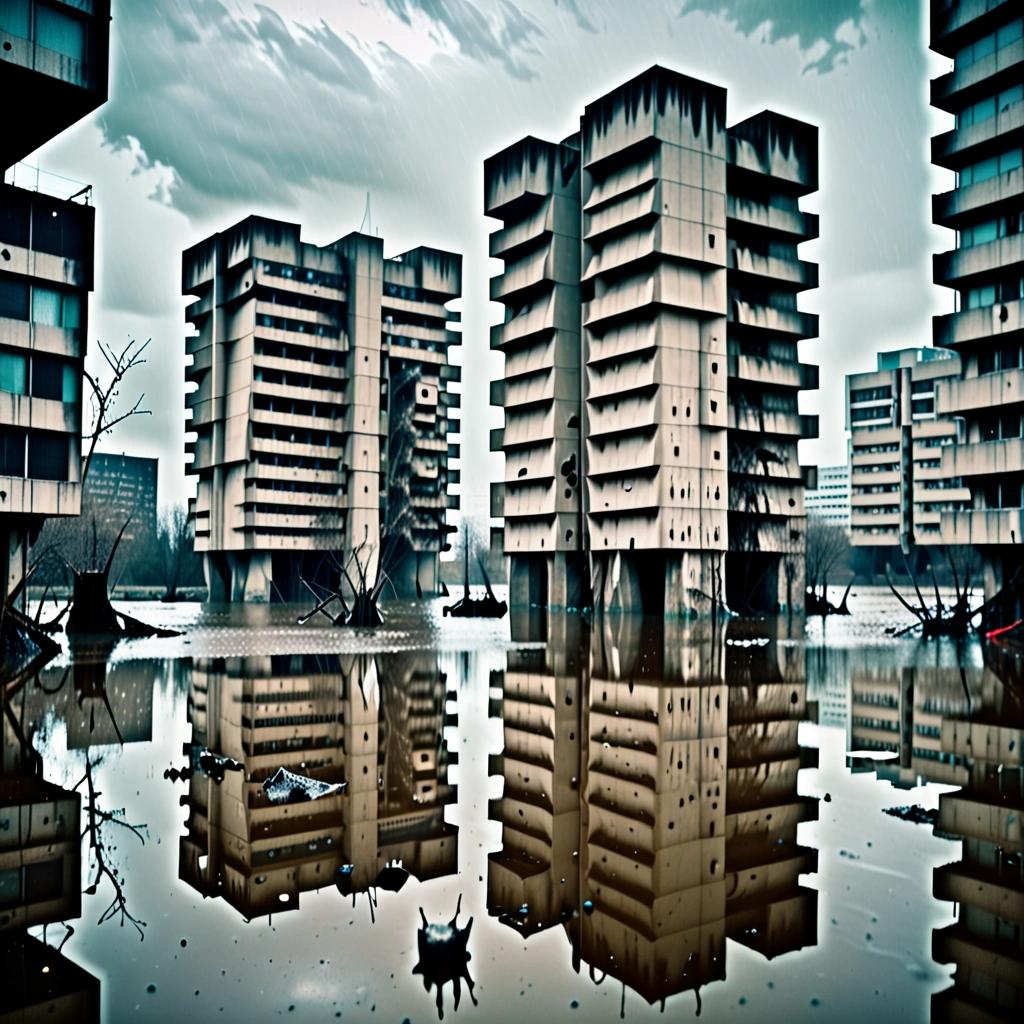
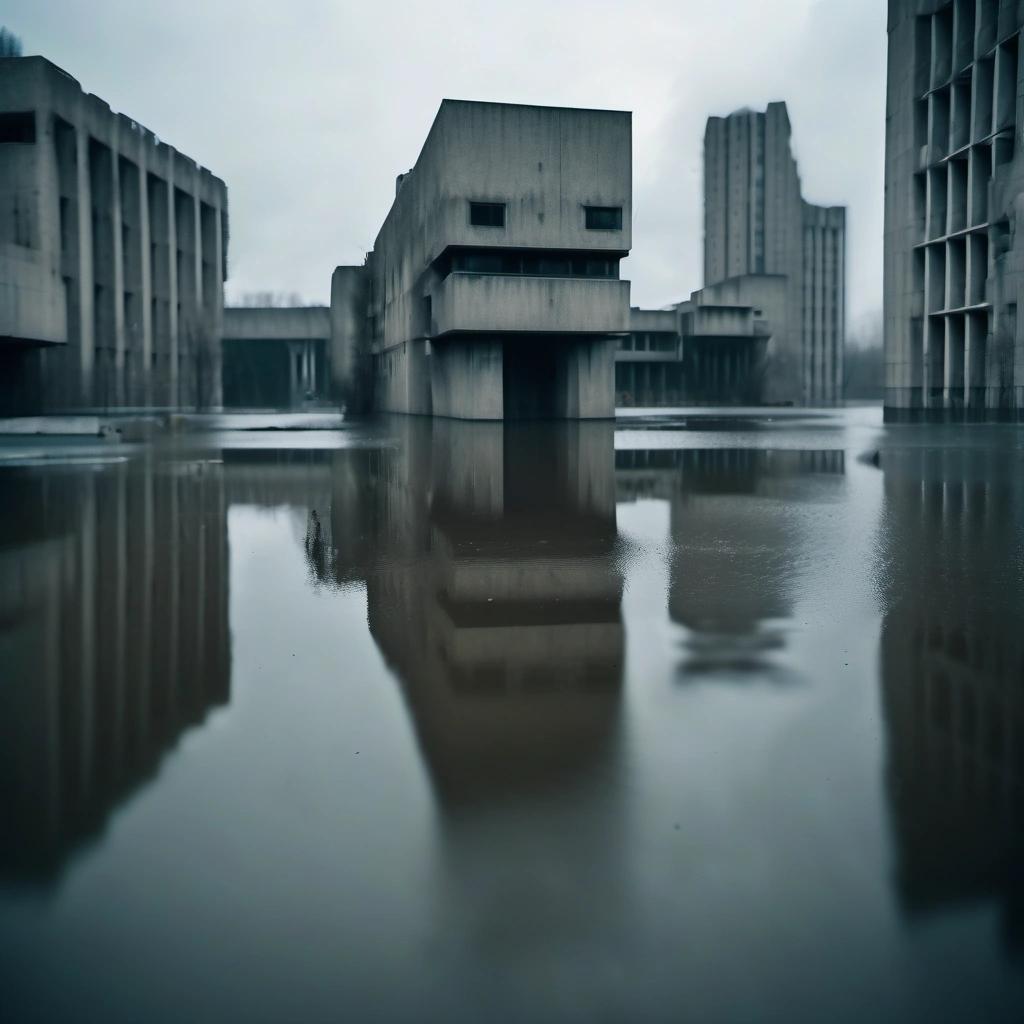
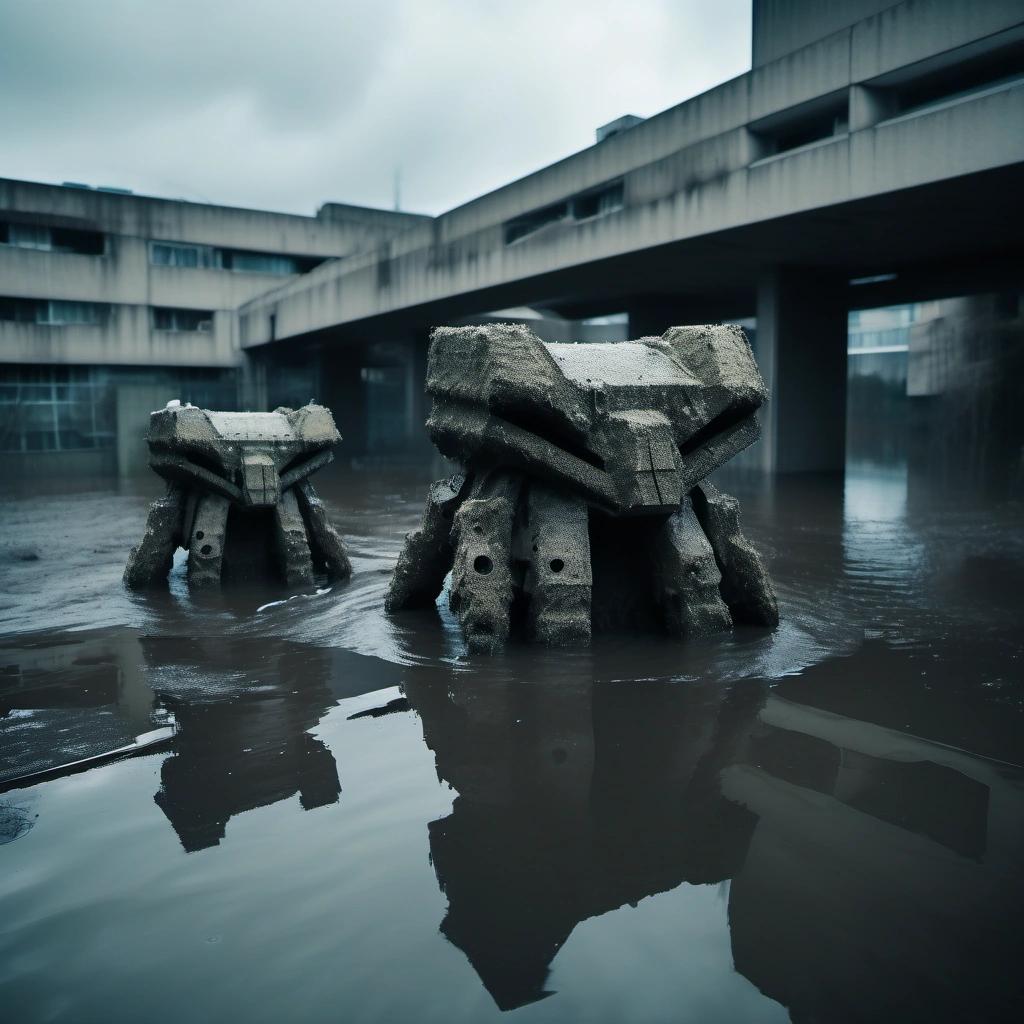
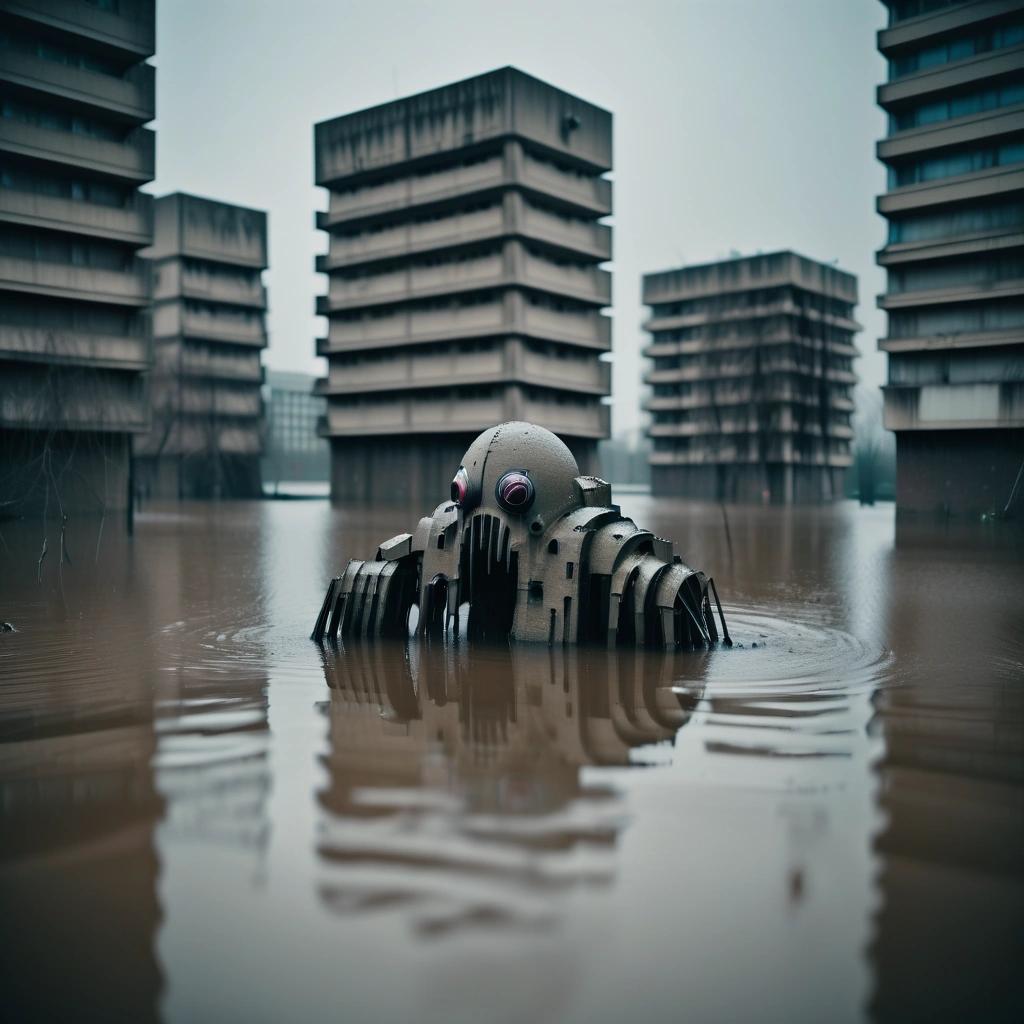
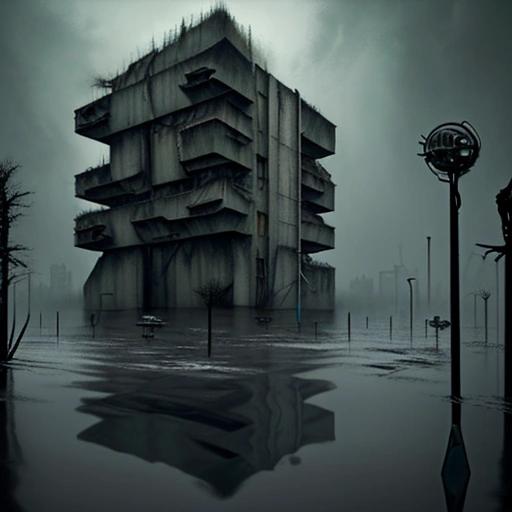
The profundity of this image is remarkably conveyed through the unyielding potency of high-resolution photography, a captivating encapsulation of the bleak, dreary reality of a brutalist dystopia on the precipice of oblivion. Captured through the discerning lens of a professional Nikon camera, the shot tantalisingly reveals every raw detail and glaring imperfection of our decaying world, imbuing a chilling realism that laces the atmosphere. The 100 ISO preserves a fine balance of light and shadow, thus exploiting the camera's sensor sensitivity to manifest an arresting spectrum of inky blacks and grubby whites. This steely defiance of colour permeates the image, mirroring the austerity of the brutalist abominations that hauntingly dominate the scene. Sprawling monoliths of crude concrete, their labyrinthine mazes of stark, oppressive geometry, boast a chilling disregard for subtlety or finesse, rising eerily from the dark flood waters like sombre tombstones — an unforgiving monument to a world shackled by the iron chains of dystopia. Artfully utilising the f11 lens, the photographer crafts a sharp depth of field that wields focus like a scalpel: it isolates brutalist colossi, stark against a brooding, storm-laden skyline yet blurs the encompassing desolate waterscape into a disorienting mire of hostile grey. A mournful tableau shrouded in an ambiance of desolation, it's a hellish vision of an estranged realm clinging desperately to existence. The immersive quality of this professional photograph, shot in desolate gloom, solicits both awe and dread. An unflinching testament to the dissonance of brutalism amid a stark, desolate landscape, the image serves as a disconcerting epitaph of the dying world — a harsh illumination of a reality we may one day be unable to escape from. It's an artistic paradox, encapsulating both repulsion and fascination in its stark depiction of a regimented, decaying world. In all its darkness, this image resonates with a chilling echo, a stark reminder of the power of professional photography in bearing witness to the raw truths of our planet's potential demise.
The depicted scene before us is chilling, steeped in a...
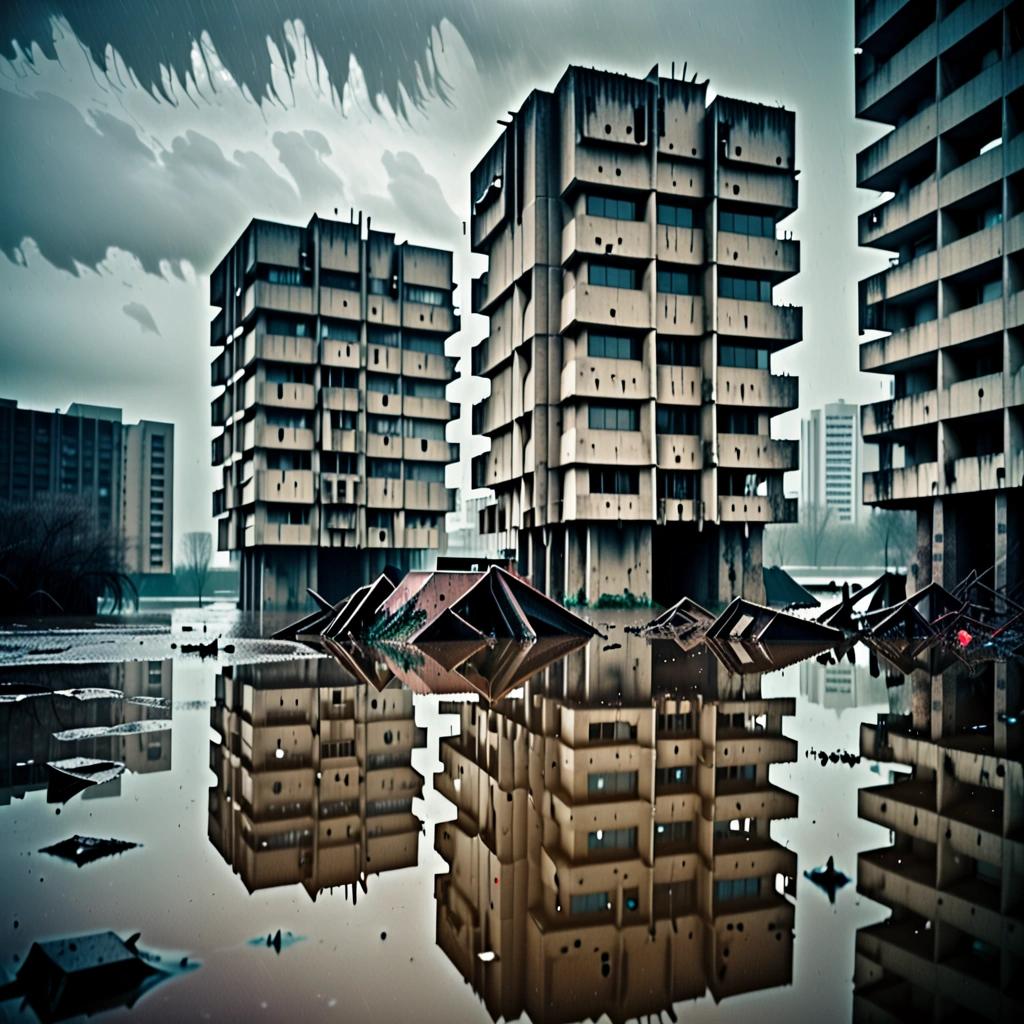
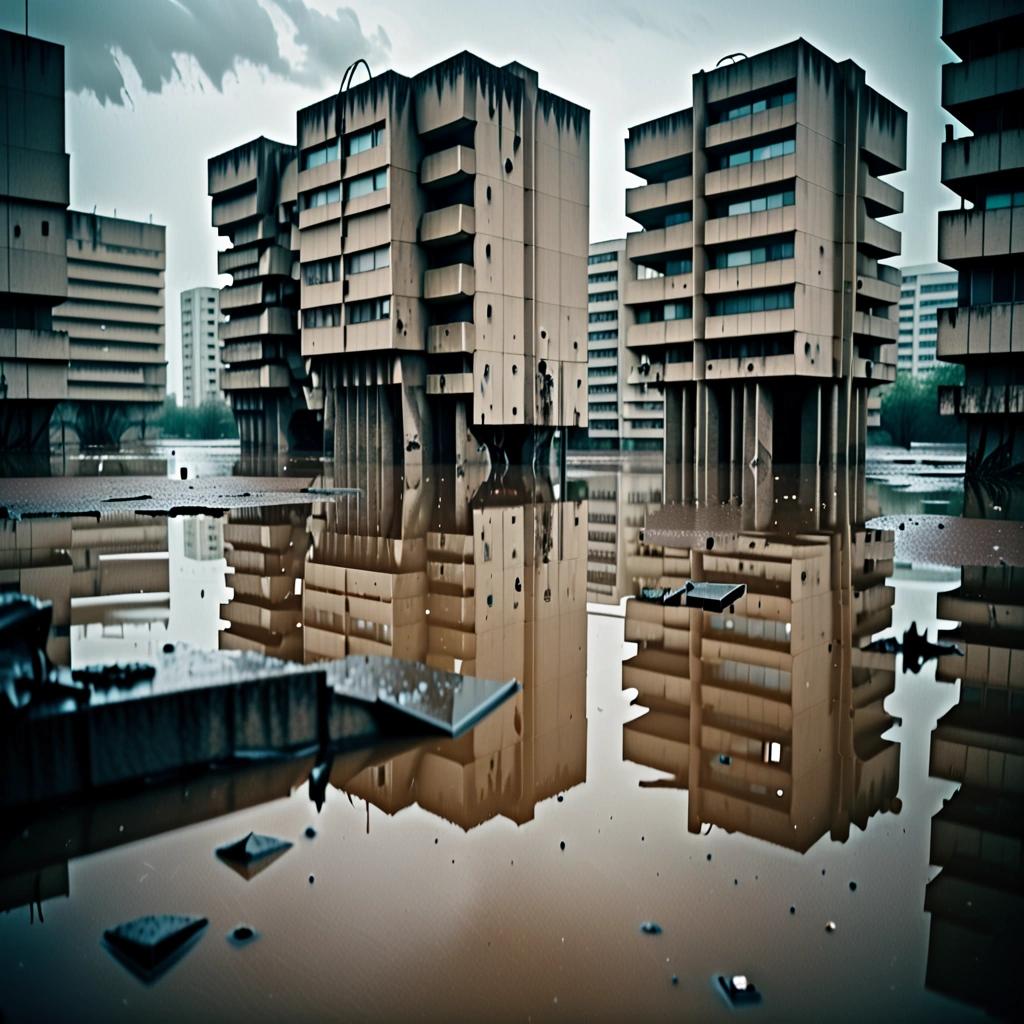
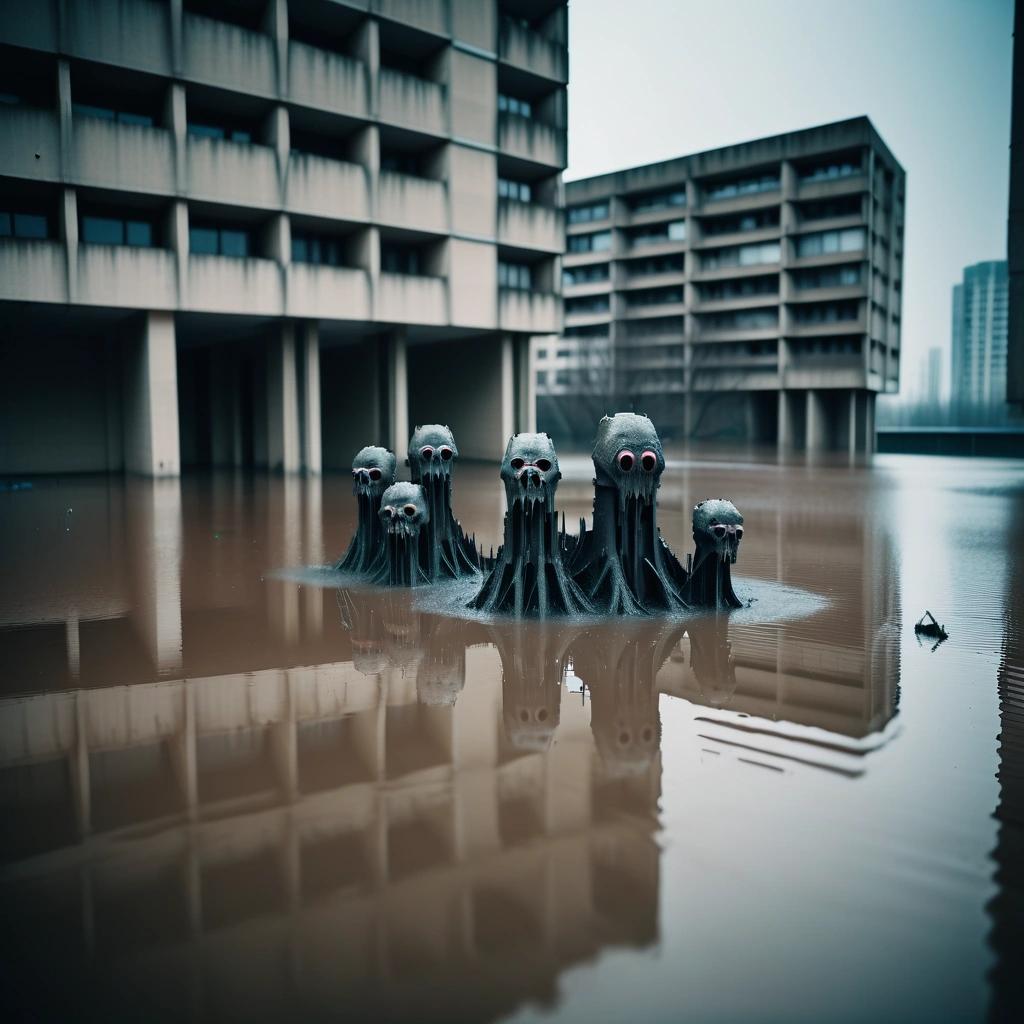
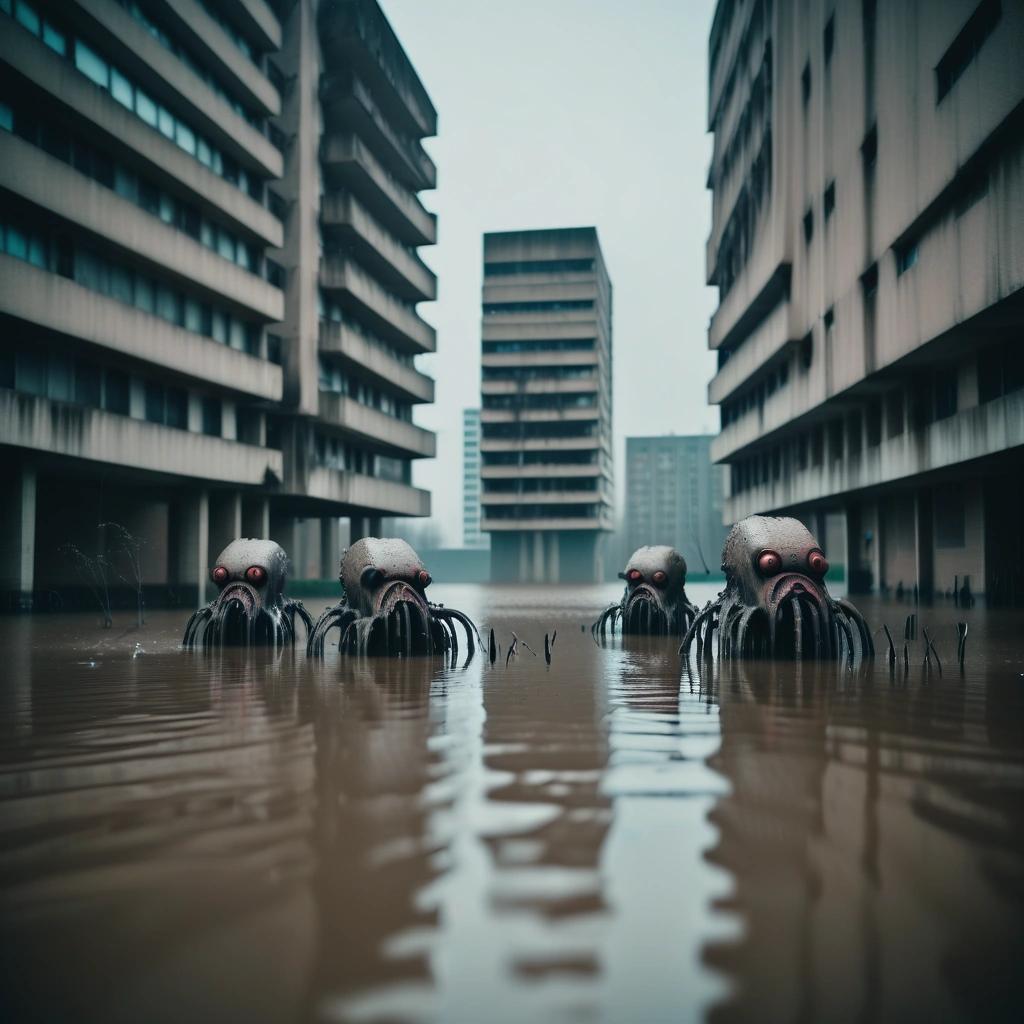
The depicted scene before us is chilling, steeped in a hauntingly macabre beauty of a decaying world. Harshly monolithic and menacing, the brutalist structures punctuate the dark, dilapidated landscape, crowned by an asphyxiatingly dreary sky. Their enormous, pitiless edifices, reminiscent of Orwellian dystopia, speak undeniably of a once unrelenting obsession with brutalist architectural doctrines. Standing unapologetically blunt, the colossal constructions appear as monstrous abominations, their forms devoid of frivolous ornamentation or softening curves. The buildings emanate an overwhelming sense of stoic indifference, their stark and unyielding substance a testament to brutalist ideals of functionalism and honesty of materials. Encrusted with burnished patinas and patches of despairing darkness, their harsh geometry soberly mocks the deserted world around them. Beneath them, the once thriving world is now a metaphorical hellscape, gasping under the weight of corrupted deluges. The desolate world is garrotted by rising floodwaters, a sickly colour palette of oxblood, cerulean, and ink-dark obsidian. Distorted reflections of the unlovable monoliths shimmer precariously on the murky surface, intensifying the sinister atmosphere. The visages of lifeless trees, skeletal and stark, sporadically punctuate the scene, their despondency echoed by the ominously quiet waters. Mouldering vegetation clings stubbornly to the remnants of dry land - half drowned islands of the former civilization painfully contrasting against the stagnant, violent floodwaters. However, as if shedding an accusing light on the morose tableau, a string of pallid, almost acidic light knifes through the steel-grey cloudscape, casting an eerie luminescence on the flooded dystopia below. Beyond the purgatorial waters and harrowing leviathans of brutalist architecture, the world converges to a dreary horizon, shrouded in provisional obscurity. A dying world enduring its death throes, pitiful yet undeniably grand in its catastrophic ignominy. Indeed, this image is an uncannily potent manifestation of a brutalist apocalypse, a gross and melancholic testimony to humanity's unheeded hubris.